Hoonah-Angoon Census Area Alaska Schools Calendar
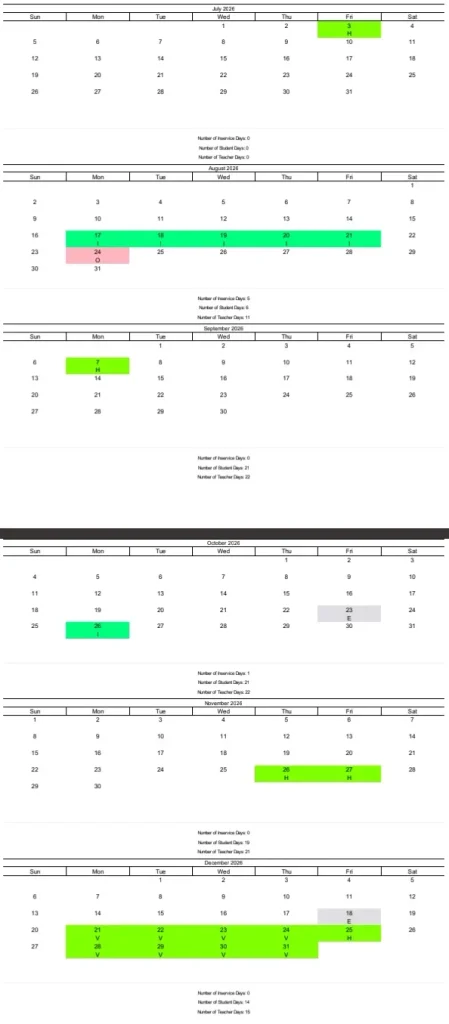
Schools in the Hoonah-Angoon Census Area are run by three separate small districts rather than one, and together they serve only a few hundred students. Hoonah City School District teaches about 110 students in a single PK-12 building, Chatham School District spans Angoon, Gustavus, Klukwan, and Tenakee Springs, and Pelican has its own city district. That means there is no single census-area calendar. A family’s dates depend on which community they live in.
School District Structure in the Hoonah-Angoon Census Area
Alaska has no counties, and the Hoonah-Angoon Census Area is a statistical area in Southeast Alaska, not a borough with its own government. Schools here are run by city districts or by a regional district, never by a borough school board. Three districts operate in the census area:
- Hoonah City School District serves the city of Hoonah. The district has one school and about 110 students, and Hoonah City School covers grades PK-12 and employs about 11 FTE teachers. schooldiggerallk12
- Chatham School District is headquartered in Angoon. It operates four schools and serves about 147 to 161 students depending on how enrollment is counted. Its schools are Angoon School, Gustavus School, Klukwan School, and Chatham Correspondence. plainschoolsautocaldata
- Pelican City School District serves the small fishing community of Pelican on the outer coast.
Each district has its own superintendent’s office and governing school board, with members drawn from the communities it serves. Board names and meeting schedules differ by district and change from year to year, so confirm them on each district’s website. Many board meetings are held by teleconference, which makes it practical for residents in communities with no road connection to listen in or participate.
This is a rural and remote setting in every sense. Hoonah, Angoon, Gustavus, Tenakee Springs, and Pelican are reached by small plane or by ferry, and Klukwan sits on the Haines Highway. That isolation affects staffing, supply deliveries, and how much flexibility a district has when it builds a calendar.
Academic Calendar Structure
Because there are three districts, you will see three calendars. The pattern is similar to other small Alaska districts: school opens in mid-to-late August, staff report several days earlier for workdays and inservice training, and the year closes in May. Calendars are usually approved by each board during the preceding spring. Check the district for exact first and last days, since I can’t state specific dates for the current year with confidence.
A few features are worth knowing:
- Semesters and quarters: Alaska districts commonly report in quarters or semesters, with a winter break near the end of the fall term. Ask your district which system it uses.
- Start and end times: School day hours are set locally, and in tiny schools, one building serves all grades, so there is typically a single bell schedule instead of separate elementary, middle, and high school times.
- 180 days: Alaska law requires 180 days of school, along with minimum instructional hours that vary by grade level. District calendars can include teacher inservice days and workdays in the 180 count, so the number of days students actually attend can be lower.
Links to Neighboring Calendars
Families who live near district boundaries often need to compare schedules. If you want to see how the surrounding region plans its year, the Hoonah-Angoon Census Area Alaska Schools Calendar covers local planning for this part of Southeast Alaska, and the Haines Borough Alaska Schools Calendar is especially useful for Klukwan families, since the village sits on the Haines Highway and relies on that corridor for travel, shopping, and many services.
School Holidays and Breaks
Expect the usual national breaks, plus a few that reflect Alaska and the Tlingit communities that make up much of the census area. Exact dates must be confirmed against each district’s calendar.
- Labor Day: First Monday in September.
- Fall break: Not universal. Some Alaska districts schedule a break around October conferences or inservice days.
- Alaska Day: October 18 is a state holiday, and some districts schedule around it.
- Thanksgiving: Usually Thursday and Friday, sometimes extended.
- Winter break: Typically about two weeks around Christmas and New Year’s Day.
- Martin Luther King Jr. Day: Third Monday in January.
- Presidents’ Day: Third Monday in February.
- Spring break: Usually late March or early April.
- Seward’s Day: Last Monday in March, which can coincide with spring break.
- Memorial Day: Last Monday in May.
- Local and cultural observances: Communities such as Hoonah and Angoon sometimes build in culture days or community event days. Ask the district whether any apply.
How to Find the Official Calendar
Each district posts its own calendar, so go to the website of the district that serves your community. Look under sections labeled “District,” “Parents,” or “Community” for a PDF. The Alaska Department of Education and Early Development also hosts a statewide school calendar database where districts file approved calendars, which is a good cross-check.
If you cannot find a posted calendar, call the district office. For Hoonah City School, the school’s published number is (907) 945-3613, and Chatham School District’s office in Angoon can be reached at (907) 788-3302. Individual schools may also publish supplemental calendars for community events, concerts, and sports.
Early Release Days, Teacher Workdays, and Professional Development
With staff teams this small, a single inservice day affects the entire school. Teachers return before students for workdays and training. During the year, districts may schedule inservice days or early release days for training, and Alaska’s literacy law, the Alaska Reads Act, has added training requirements that can shape when those days fall. Because Chatham’s schools are spread across several communities, the district may schedule joint training that involves travel.
Notices usually go out through school newsletters, the district website, social media, and direct messages to families.
Emergency Closures and Weather Days
Closures here are driven by winter storms, high winds, and the realities of getting around small communities. Superintendents or school administrators decide, based on local conditions. For schools reached by water or air, a storm that grounds planes or halts ferries can disrupt staffing and supplies even when the school itself is open.
State calendar templates include a marker for emergency closure days, and districts may recover lost time by adding days at the end of the year, building in spare days, or seeking a state waiver. Ask your district which method it uses.
For announcements, check:
- The district website and social media pages
- Text or email alerts, if you are signed up
- Community Facebook groups and local announcements, which are widely used in small Alaska communities
- Regional radio from Juneau, such as KTOO or KINY, for broader weather and travel advisories
Because there is no single media outlet that covers the whole census area, signing up with your own district is the most reliable approach.
Graduation and End-of-Year Schedule
Final exams generally take place in the last week or two before the year ends in May. Graduation classes in this area are tiny, sometimes just a handful of seniors, and ceremonies are often community events held in the school gym. Dates and venues vary by community. Younger students may have promotion or awards events organized by the school. Report cards and grades are usually available through a family portal or from the school office.
Back-to-School and Registration Information
New families should contact the school or district office directly. Enrollment usually opens in spring ahead of the next school year, and students can enroll when they arrive. Districts commonly ask for:
- Proof of residency in the district’s attendance area
- A birth certificate or other proof of age
- Immunization records or a documented exemption
- Records from the previous school
Supply lists and meet-the-teacher events usually appear in August. In communities served by Chatham School District, ask whether your child’s school has a specific opening schedule, since small schools sometimes stagger events.
Special Programs and Their Calendar Implications
Specialty programs here look different from those in large cities. Magnet schools do not exist at this scale, but there are other options to know about:
- Correspondence: Chatham Correspondence is listed as one of Chatham’s four schools, associated with Tenakee Springs. Correspondence programs often follow their own deadlines and activity schedules.
- Distance and dual enrollment: Online and college-level courses may use a different calendar from the local school.
- Pre-K: Hoonah City School and Angoon School both list pre-kindergarten grades, though start dates for younger students can differ.
- Culture and language programs: Many schools in the area incorporate Tlingit language and culture, and related events may appear on the calendar.
Athletics and Extracurricular Calendar Context
High school sports and activities in Alaska are governed by the Alaska School Activities Association (ASAA). Seasons and tournaments are set by the association, not by the districts, but they overlap with the academic calendar. For schools here, travel is the major factor, since games and meets typically require flights or ferries. Trips can take students out of class for several days, sometimes near exams or breaks. Ask the school for its activity schedule.
State-Level Calendar Requirements and How Alaska Law Governs the Census Area
The Alaska Department of Education and Early Development (DEED) sets the minimum 180 days and instructional hours. Within that framework, the Hoonah City, Chatham, and Pelican boards decide their own start and end dates, break lengths, and inservice schedules. They cannot fall below the state minimums, but they can adjust the calendar to local conditions, such as subsistence seasons, weather, and transportation limits. That flexibility is one reason calendars differ even between communities that are geographically close.
Frequently Asked Questions
When does school start in the Hoonah-Angoon Census Area, Alaska?
Most schools here open in mid-to-late August, but each district sets its own date. Check Hoonah City, Chatham, or Pelican for the current year.
When does school get out for summer in the Hoonah-Angoon Census Area?
Usually in May. The exact last day depends on your district’s adopted calendar.
How many days are in a school year in the Hoonah-Angoon Census Area?
Alaska requires 180 days, with minimum instructional hours by grade level. Local calendars may count inservice days differently.
How do I find out if school is cancelled today in the Hoonah-Angoon Census Area?
Check your district’s website and social media, look for text or email alerts, and call the school office if needed. Community groups and Juneau radio can add context during storms.
What is the spring break schedule for schools in the Hoonah-Angoon Census Area?
It is usually in late March or early April, but each district picks its week. Look at your district’s calendar.
How do I enroll my child in schools in the Hoonah-Angoon Census Area?
Contact the school or district office in your community. Bring proof of residency, a birth certificate, and immunization records.
Are there any year-round schools in the Hoonah-Angoon Census Area?
Schools follow a traditional August-to-May schedule. Correspondence programs, such as Chatham Correspondence, may offer more flexible timing.
Who do I contact about school calendar questions in the Hoonah-Angoon Census Area?
Contact the district that serves your community: Hoonah City School District, Chatham School District in Angoon, or Pelican City School District.
One Comment