Yukon-Koyukuk Census Area Alaska Schools Calendar
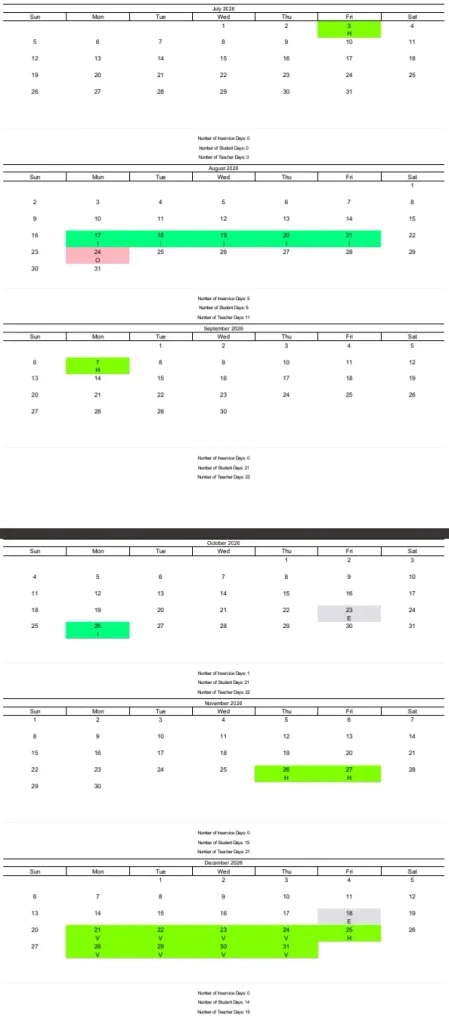
More than half a dozen separate school districts serve the villages of Alaska’s vast Interior, from the Yukon River communities to the Koyukuk River and the Dalton Highway corridor, and each one adopts its own calendar. The census area is larger than many US states, has almost no road connections between communities, and its schools run on dates shaped by river ice, fish camps, and air travel.
School District Structure in the Yukon-Koyukuk Census Area
Alaska has no counties. Most of the state lies in the Unorganized Borough, which is divided into census areas for statistical purposes, and the Yukon-Koyukuk Census Area is one of the largest. A census area has no government of its own and no school board, so education here is delivered by independent Regional Educational Attendance Area (REAA) districts and a few city school districts. This is a major difference from places like Yakutat, where one municipal board governs the only school.
Several districts operate within or overlap the census area. The Yukon-Koyukuk School District, headquartered in Fairbanks, serves a large number of villages along the Yukon and Koyukuk rivers, including Galena-area outlying sites, Huslia, Hughes, Koyukuk, Nulato, Kaltag, Ruby, Allakaket, and others, and is governed by the Yukon-Koyukuk School District Board of Education. The Galena City School District serves Galena. The Iditarod Area School District serves communities such as Anvik, Grayling, Shageluk, Holy Cross, and McGrath, and is governed by its own board. The Yukon Flats School District, based in Fort Yukon, covers Yukon Flats communities and may overlap adjoining census areas. The Denali Borough and other neighboring systems may also serve students near the Dalton Highway and Healy-area corridors. Some of these districts straddle census area lines and boundaries and school lists change, so verify which district serves your community with the Alaska Department of Education and Early Development (DEED) or the district office.
Boards generally meet monthly during the school year, with agendas posted ahead of time and meetings open to the public. Teleconference participation is common because members live in widely separated villages. Check each district’s website for the current meeting schedule.
The area is entirely rural and remote. Most villages are reached only by air, river, or winter trail, and many schools serve fewer than 50 students.
Academic Calendar Structure
Interior Alaska districts commonly open in mid to late August and close in late May, and the districts here follow that general pattern. Because each board adopts its own calendar, first and last days can differ between Galena, McGrath, Fort Yukon, and the Yukon-Koyukuk district’s village sites. Families with children in more than one district, or staff who move between them, should compare calendars side by side.
Each board typically adopts the next year’s calendar in the spring, and the district posts it afterward. A date on a third-party site is not reliable until it matches the board-adopted version.
The year is usually divided into two semesters, with the first ending near winter break and the second running from January into May. Grading periods are commonly quarters, and secondary students earn credit by semester.
State law sets the minimum. Alaska requires a school term of at least 180 days, and DEED sets minimum instructional hours by grade level, roughly 450 for kindergarten, 720 for grades 1 to 3, and 900 for grades 4 to 12. Districts may meet the requirement through days, hours, or a combination, and rural districts often build calendars that flex around local conditions.
Bell times vary by school. Larger sites such as Galena may run separate grade-level schedules, while most village schools serve kindergarten through grade 12 in one building on one schedule. Confirm current times with the school office.
School Holidays and Breaks
The districts observe the standard federal and seasonal breaks: Labor Day in early September, Thanksgiving break in late November, and a winter break of about two weeks around Christmas and New Year’s Day. Martin Luther King Jr. Day and Presidents’ Day are generally days off, and Memorial Day falls near the end of the school year.
Spring break usually falls in March or April. In the Yukon and Koyukuk river villages, spring is also the season for muskrat trapping, spring bear and waterfowl hunting, and travel by snowmachine before breakup, so some districts place breaks or culture days with subsistence activities in mind. Fall moose hunting can lead families to request time away. Alaska Native heritage observances, including Koyukon Athabascan and Gwich’in cultural events, may appear on local calendars, and community potlatches or funerals can affect attendance in small villages. Check each district’s adopted calendar for which dates apply to students.
Exact dates shift annually, so use the current adopted calendar from your district.
How to Find the Official School Calendar for the Census Area
Because no single body governs the area, there is no single calendar. Start with the website of your child’s district, such as the Yukon-Koyukuk School District, Galena City School District, Iditarod Area School District, or Yukon Flats School District. Look under sections labeled “District,” “Parents,” or “Community” for a PDF of the current year’s calendar. Draft calendars are often discussed at spring board meetings, so agendas and minutes can show upcoming dates before the final version is posted.
Families comparing Alaska’s school calendars across very different regions may find it useful to read the Yakutat City and Borough Alaska School Calendar page to see how a single one-school municipal district on the Gulf coast sets its year, and then the Yukon-Koyukuk Census Area Alaska Schools Calendar page to see how several independent Interior districts each adopt their own dates across a roadless region of river villages.
Individual schools also keep supplemental calendars for concerts, basketball tournaments, assemblies, and parent nights, and these may list events that never appear on the district calendar.
Early Release Days, Teacher Workdays, and Professional Development
Teachers generally report a few days before students return in August for classroom setup, planning, and orientation. In remote districts, this often means staff flying into villages by small plane, so teacher arrival and weather can affect the first week of school. During the year, districts schedule professional development days when students are not in attendance, often near the end of a quarter or around semester breaks. Training may be held in Galena, Fairbanks, or McGrath, or delivered by video.
Alaska requires districts to include certain topics in staff training, such as suicide prevention and recognition of child abuse and neglect, and these are usually built into in-service days. Early release schedules are announced through newsletters, automated messages, and district social media. Check the calendar at the start of each month, since early release affects childcare and rides in small villages.
Emergency Closures and Weather Days
Closure triggers here differ from most of the country. Routine snow and cold are expected, but dangerous cold, blizzards, power or heating failures, water system problems, and fuel delivery issues can all disrupt school. Spring breakup brings flooding risk along the Yukon River, as seen in Galena’s major 2013 flood, and fall freeze-up can strand travel. Summer wildfire smoke can affect the start of the school year in some years. Superintendents or their designees make closure decisions, usually after consulting principals, village leaders, and utility staff, and one village school may close while others stay open.
Alaska does not set a fixed number of makeup days. Districts must still meet the required days and hours, so lost time may be made up by extending other days, adding days at the end of the year, or, in exceptional cases, requesting a waiver from DEED. The adopted calendar shows how each district plans for lost time.
Closures are posted on district websites and social media and sent through automated notification systems, but many families rely on community radio and local village communication. Regional stations from Fairbanks also cover Interior weather. Confirm current station names with each district before publishing. Because storms can disrupt power and internet, a battery-powered radio remains a dependable fallback.
Graduation and End-of-Year Schedule
High school final exams usually take place in the last week or two of May. Graduation in the river villages is a community event, with ceremonies commonly held in the school gym or community hall in late May. A graduating class may have only one or two seniors, and the ceremony draws extended families and neighbors from across the village and sometimes from nearby communities.
Elementary and middle school promotion or recognition events take place near the end of the year. Report cards are distributed at the end of each grading period, and parents can generally access grades through their district’s student information portal, with login information provided by the school office.
Back-to-School and Registration Information
Enrollment for the next school year typically opens in the spring, and returning families may re-enroll online or through the school office. New families register at their village school or the district office. If you are moving to the area, confirm which district serves your community before registering.
Typical documents include proof of residency, a birth certificate or other proof of age, and immunization records. Proof of residency can be flexible in villages without formal street addresses. Alaska requires students to be up to date on immunizations or hold an approved exemption. School supply lists, where used, are usually posted in July or early August, and many schools supply basics to students. Open house or meet-the-teacher events typically occur the week before or the week of the first day. Because freight comes by air or barge, families moving from the Lower 48 should allow extra time for shipping records and supplies.
Special Programs and Their Calendar Implications
These districts are too small for magnet schools, but some programs follow different schedules. Dual enrollment and college credit courses through the University of Alaska system, including offerings connected to Interior Alaska Campus, follow university semester dates that do not always match district calendars.
Pre-K and early childhood services depend on the provider and may follow separate calendars, and Head Start and Alaska Native organization programs, such as those operated by regional tribal nonprofits, set their own schedules. Statewide correspondence and distance education programs operate on independent calendars, and families should confirm those directly. Online courses and digital learning help students in tiny schools reach classes that would be hard to staff locally.
Athletics and Extracurricular Calendar Context
High school sports in Alaska are governed by the Alaska School Activities Association (ASAA). Teams from Galena, McGrath, Fort Yukon, and other schools compete on ASAA schedules that run separately from, but alongside, the academic calendar. Away competitions typically involve air travel, so teams can miss several school days for tournaments, and weather can change travel plans on short notice. Many schools field small teams or co-op arrangements, and offerings vary from year to year. Academic eligibility rules apply, and exam periods can affect scheduling. Check team calendars in addition to the district calendar.
State-Level Calendar Requirements and How Alaska Law Governs the Census Area
The Alaska Department of Education and Early Development sets the framework that every district in the census area must follow. State law requires a 180-day term and minimum instructional hours by grade, and DEED reviews calendar variations when districts need flexibility.
Within those limits, each school board has discretion over start and end dates, break timing, in-service scheduling, and plans for lost time. That is why neighboring river districts can have different calendars while meeting the same state standards.
Frequently Asked Questions
When does school start in the Yukon-Koyukuk Census Area, Alaska?
Most districts begin in mid to late August, but each sets its own date. Check the website of your child’s district for the current calendar.
When does school get out for summer in the Yukon-Koyukuk Census Area?
Students typically finish in late May, with graduation and promotion events held in the final days.
How many days are in a school year in the Yukon-Koyukuk Census Area?
Alaska requires at least 180 days along with minimum instructional hours by grade. Each district builds its calendar to meet both.
How do I find out if school is cancelled today in the Yukon-Koyukuk Census Area?
Check your district’s website and social media, watch for automated calls or texts, and listen to local radio. Closures can apply to one village or district rather than the whole area.
What is the spring break schedule for schools in the Yukon-Koyukuk Census Area?
Spring break is typically in March or April, and dates are set annually by each district.
How do I enroll my child in schools in the Yukon-Koyukuk Census Area?
Contact the district or school that serves your community, or use an online enrollment option if one is posted. Bring proof of age, proof of residency, and immunization records.
Are there any year-round schools in the Yukon-Koyukuk Census Area?
No. The districts follow a traditional August-to-May calendar, though summer programs may be offered at times.
Who do I contact about school calendar questions in the Yukon-Koyukuk Census Area?
Call the district office for your community or your child’s school office, and review school board agendas for calendar discussions.
One Comment