Kusilvak Census Area Alaska School Calendar
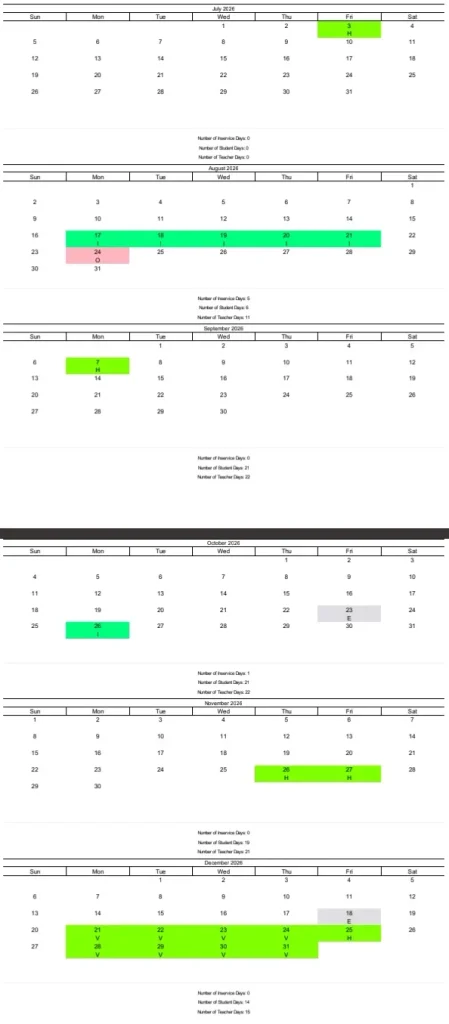
Thousands of students in the Yukon-Kuskokwim Delta attend school in a part of Alaska with no borough government, no road connection to the rest of the state, and three separate public school districts. The Lower Yukon School District, the Kashunamiut School District in Chevak, and the St. Mary’s School District each adopt their own calendar, and all three plan the year around river ice, goose and fish seasons, and travel by boat, snowmachine, or small plane. Alaska calls this area a census area, not a county or a borough, so this is the Kusilvak Census Area, and it sits in the state’s Unorganized Borough.
School District Structure in the Kusilvak Census Area
Because the census area has no borough assembly, public education is not run by local government. Schools are operated by regional educational attendance areas and city school districts that are funded mostly by the State of Alaska, with federal support. That makes this very different from most Alaska boroughs, where the borough government helps fund the district, and very different from Texas, where a single county can hold dozens of independent districts.
Three public districts serve the area:
- Lower Yukon School District (LYSD): The largest, with an administrative office in Mountain Village. It serves many of the communities along the lower Yukon River and the Bering Sea coast, including Alakanuk, Emmonak, Hooper Bay, Kotlik, Marshall, Mountain Village, Nunam Iqua, Pilot Station, and Scammon Bay.
- Kashunamiut School District: A single-community district serving Chevak, known for its focus on Cup’ik language and culture.
- St. Mary’s School District: A small district serving St. Mary’s, and nearby Pitkas Point and Andreafsky students.
Each district has its own school board, with members elected from the communities served, and its own superintendent’s office. Boards meet on posted schedules and often rely on teleconference so members from distant villages can take part. Because the three districts operate independently, families should not assume the same dates apply across the census area.
The area is entirely rural and remote. Most communities are Yup’ik or Cup’ik villages with populations of a few hundred to a couple thousand, and nearly all are off the road system. Emmonak, Hooper Bay, and Mountain Village are among the larger communities. Private schools are rare here, so nearly all school-age children attend the district school in their village.
Academic Calendar Structure
Districts in the region generally start in mid-to-late August and finish in mid-to-late May. Each board adopts its own calendar, and the Y-K Delta tends to build in flexibility that a road-system district would not need. The only dependable source for a given year is the adopted calendar from your district.
Calendars are generally split into two semesters, with the fall semester ending around the winter break and the spring semester starting in early January. Progress is reported by quarter, and the district sets its own report card dates. Confirm timing with your child’s school.
Alaska sets its minimum by days and by hours. State law calls for 180 days of instruction, and state regulations set minimum instructional hours, commonly cited as 900 hours for elementary students and 990 for secondary students. Districts can ask the Alaska Department of Education and Early Development to approve alternatives. Many Y-K Delta districts schedule the year so that those hours are met even when a few days are lost to weather or travel disruptions.
Bell times vary by school. Village schools are small, and a K-12 school may share a building and a schedule across several grades. Check your school’s page on its district website for current times.
School Holidays and Breaks
Calendars in the area follow the national pattern with local adjustments:
- Labor Day: The first Monday in September.
- Fall Break: Some districts schedule in-service or break days in the fall. Check the adopted calendar.
- Thanksgiving Break: Usually Thursday and Friday, often with Wednesday or the full week.
- Winter Break: Typically about two weeks around Christmas and New Year’s, and sometimes longer in villages with strong holiday traditions.
- Martin Luther King Jr. Day: The third Monday in January.
- Presidents’ Day: The third Monday in February, sometimes paired with an in-service day.
- Spring Break: Often one week in late March or early April, though some Y-K Delta districts place a break to match spring subsistence activities.
- Memorial Day: The last Monday in May, near the end of the school year.
- Local and state observances: Alaska Day (October 18) and Seward’s Day (last Monday of March) are state holidays. Many Y-K Delta communities also hold culture days, Elders’ events, and traditional celebrations, and some districts build these into the calendar.
Dates shift every year, so use your district’s adopted calendar and not one from a previous year.
Where to Find the Official Kusilvak Census Area School Calendar
There is no census-area-wide calendar. You need the calendar from the district that serves your village:
- Lower Yukon School District: lysd.org
- Kashunamiut School District: kashunamiut.org
- St. Mary’s School District: stmarys.k12.ak.us
Check each district’s website to confirm its current address. The adopted calendar is usually posted under a section labeled “District,” “Parents,” or “Community,” sometimes as a downloadable PDF. Boards commonly adopt calendars in winter or spring for the following year. Because internet access can be limited in some villages, many districts also share calendars through school newsletters, social media, local radio, and printed copies at the school office.
Individual schools may post supplemental calendars for sports, culture days, concerts, and community events. If a date affects work or travel, check both the district calendar and your school’s page.
Families who follow school schedules in more than one part of Alaska will find that start dates and breaks differ a good deal by region. The Kodiak Island Borough Alaska School Calendar shows how an island district with a borough government and a Coast Guard community sets its year, and comparing it with the Kusilvak Census Area Alaska School Calendar shows how a remote Yup’ik region in the Unorganized Borough, with no borough support and a strong subsistence calendar, handles the same decisions.
Early Release Days, Teacher Workdays, and Professional Development
Teachers return a few days before students in August for workdays used to prepare classrooms, plan lessons, and attend district meetings. In a region where many staff travel in from other parts of Alaska or the Lower 48, these days also help new teachers settle into village life.
During the year, calendars typically include professional development or in-service days when students stay home. Districts here often bring teachers together for training in a hub community, which requires air travel and can affect the schedule. Alaska requires certain staff training on topics such as suicide prevention and child abuse and neglect recognition, and districts commonly place this on in-service days. Some districts also schedule cultural orientation for new teachers.
Early release days are less frequent than in larger districts but do occur for staff collaboration or parent-teacher conferences. Districts usually announce them through school newsletters, social media, radio, and calls or messages to families. Release times vary by school, so confirm with the school office.
Emergency Closures and Weather Days
Closure decisions are made by the superintendent or the principal, often in consultation with the district’s transportation staff and the village. In this region, closures are driven by conditions different from those in a typical snow-prone state. Blizzards and ground blizzards, extreme wind chill, dangerous ice conditions on rivers, and storms off the Bering Sea can all affect travel. In small villages most students walk to school, so the main issues are temperature, visibility, and the safety of the walk. Spring breakup and fall freeze-up can disrupt boat and snowmachine travel, and storm surge and flooding are a risk in low-lying coastal communities such as Hooper Bay and Scammon Bay.
Other disruptions include power outages, fuel delivery problems, water and sewer system failures, and cancelled flights that strand staff. Hurricane protocols do not apply, but districts follow emergency management guidance when evacuation or shelter-in-place orders are issued.
Alaska districts commonly handle lost days by building buffer days into the calendar, adding days at the end of the year, or asking the state to approve an adjustment to required instructional time. Because village schools are small and weather can close one while another stays open, check your own district’s posted policy.
Closure news usually reaches families through these channels:
- The district website and social media pages
- Automated calls, texts, or emails, where the district uses them
- Local and regional radio, including KYUK in Bethel and KCUK in Chevak
- School office phone lines and community announcements in each village
Keep your contact information current with your school so you receive notices.
Graduation and End-of-Year Schedule
Secondary final exams usually fall in the last week or two of May, with the exact window set by each school. Graduation ceremonies are held in each village, typically in the school gym, in mid-to-late May. In communities this size, graduation is among the biggest events of the year, and relatives from other villages often travel in, so the date matters for flight bookings. Some ceremonies include Yup’ik or Cup’ik traditions, such as drumming, dancing, and Elders’ blessings.
Elementary and middle grades hold promotion ceremonies, awards, or community feasts in the final weeks. Report cards come out at the end of each quarter or semester, and many districts use an online student information portal. If you do not have portal access, contact your school office.
Back-to-School and Registration Information
Enrollment and re-enrollment generally open in spring or summer, and families can register at any time. Many families move between villages during the year for subsistence, family, or work reasons, so transfers are common, and schools are used to enrolling students mid-year.
Commonly requested documents include:
- Proof of residency in the district, such as a lease, housing authority paperwork, or a letter from the village or tribal office
- A birth certificate or other proof of age
- Immunization records as required by Alaska law
- Prior school records or transfer paperwork, if applicable
Registration is usually handled at the village school office, and some districts also take forms through their websites or district office. Supply lists, where used, are generally posted by schools in late summer. Many schools hold open houses or welcome events near the first day, and some districts supply basic materials to all students.
Special Programs and Their Calendar Implications
The region’s schools place strong emphasis on Yup’ik and Cup’ik language and culture. Kashunamiut School District is well known for its Cup’ik language program in Chevak, and districts across the area weave language instruction, Elders’ visits, and traditional skills into the school year. These activities can lead to special event days or adjusted schedules, so check your school’s calendar.
Dual enrollment and early college opportunities are typically offered through the University of Alaska system, including campuses and programs serving the Yukon-Kuskokwim region, and course schedules follow the university calendar and not the K-12 year. Many districts also offer distance courses or correspondence options, particularly for small high schools that cannot offer every subject on site. Pre-K and early childhood programs, including Head Start in some communities, may follow different calendars, so confirm start dates with the program. There are no urban magnet schools in the area, though some districts run alternative or career and technical education options.
Athletics and Extracurricular Calendar Context
High school sports and activities in Alaska are governed by the Alaska School Activities Association (ASAA), which sets season dates, eligibility rules, and championship schedules. These are separate from the academic calendar but linked to it. Basketball is hugely popular in Y-K Delta villages and runs through the winter, alongside wrestling, cross country running, and other activities. Because there are no roads between communities, teams travel by charter plane, and bad weather can delay or cancel trips. Travel is costly, and schedules often cluster games into tournaments or multi-day trips, which can overlap with holidays or exam weeks.
State-Level Calendar Requirements and How Alaska Law Governs the Census Area
The Alaska Department of Education and Early Development (DEED) oversees public education and enforces instructional time requirements for all three districts. State law sets a 180-day minimum, and regulations set minimum instructional hours by grade level. Within those limits, each district’s school board has wide latitude over start dates, break lengths, and in-service days. That flexibility matters in the Y-K Delta, where boards can respond to subsistence seasons, cultural events, and travel conditions. Districts can also seek state approval to adjust required time when closures or emergencies cut into the year, which is especially useful in a place where weather and flight disruptions can interrupt school for days.
Frequently Asked Questions
When does school start in the Kusilvak Census Area, Alaska?
Typically mid-to-late August, but each of the three districts adopts its own date. Check the website of the district that serves your village for the current calendar.
When does school get out for summer?
Usually in mid-to-late May, with graduation ceremonies held in each village around that time. Exact dates depend on the district.
How many days are in a school year?
Alaska requires at least 180 days, plus minimum instructional hours by grade level. Each district builds its calendar to meet both.
How do I find out if school is cancelled today?
Check your district’s website and social media, call the school office, and listen to regional radio such as KYUK or KCUK. Many villages also pass along closures through community announcements.
What is the spring break schedule?
Spring break is often one week in late March or early April, though some districts place it to line up with spring subsistence activities. The adopted calendar gives the exact dates.
How do I enroll my child?
Contact the school office in your village or use the registration options on your district’s website. Bring proof of residency, proof of age, and immunization records.
Are there any year-round schools?
The census area’s districts generally run on a traditional August-to-May calendar. Ask your district about any alternative, distance, or correspondence options.
Who do I contact about calendar questions?
Start with your child’s school office, then the district office: Mountain Village for Lower Yukon, Chevak for Kashunamiut, or St. Mary’s for the St. Mary’s School District. Contact details are on each district’s website.
One Comment